Textmode Field Guide
ASCII Art Gallery
Explore ASCII and plain text artwork from the textmode scene, with artist, group, release, and historical context.
ASCII art builds images from printable characters and spacing rather than terminal drawing commands. Scene artists stretched that constraint into logos, portraits, advertisements, information files, and elaborate monochrome compositions.
ASCII art without terminal control sequences
Unlike ANSI art, plain ASCII generally relies on the order and spacing of characters already present in the file. That makes the typeface, character width, line endings, and intended terminal columns important to the final appearance.
The archive separates plain ASCII and text-oriented works from ANSI when the underlying parser, SAUCE metadata, and file evidence support the distinction.
More than seven-bit typewriter pictures
BBS-era ASCII frequently used extended DOS glyphs alongside ordinary punctuation and letters. Those works are still structurally plain text even when their character set extends beyond strict seven-bit ASCII.
Information files and FILE_ID.DIZ descriptions also belong to the broader textmode record. They document releases, credits, and the language surrounding the art scene.
Rendered from the archive
Featured artwork
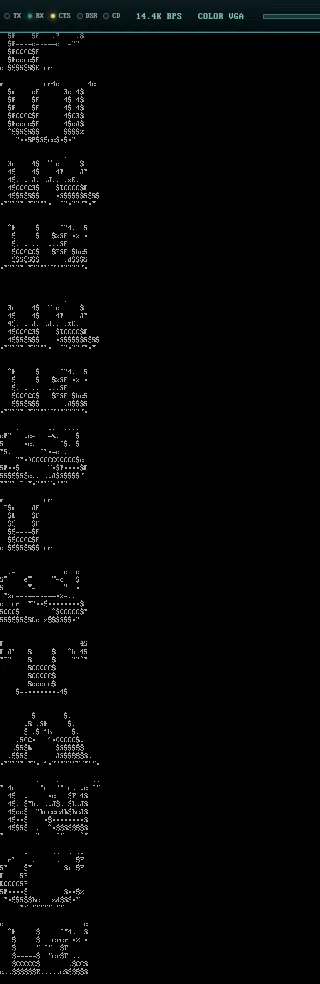
ASCII1995
KX-PRST.ASC
kxmode
Remorse 1981 · rmrs-04View in terminal →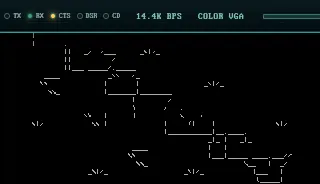
ASCII1997
MSC-TRI.ASC
massacre
triloxy · tlyx-01View in terminal →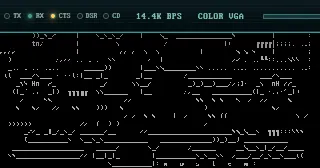
ASCII1997
tn-moslm.asc
tzeentch
serial · serial04View in terminal →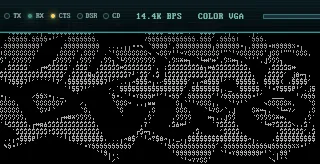
ASCII1998
Blue
cain
Remorse 1981 · rmrs-28View in terminal →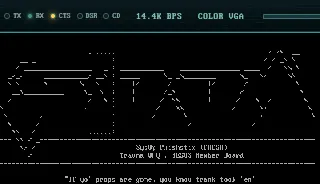
ASCII1995
WD-GLOOM.ASC
whodini
tRANK!aSCii · trank-06View in terminal →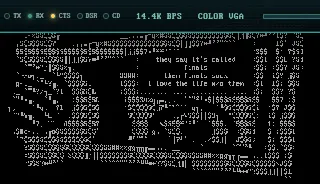
ASCII2000
SL-FNALS.ASC
slash
secular · sclr-03View in terminal →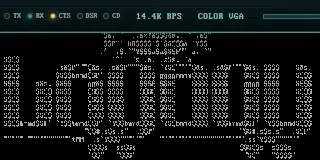
ASCII1996
TMM-LGCY.ASC
tmm
baSic!aScii · basic-04View in terminal →
ASCII1998
Class
senser
nitrophusion · nph-07View in terminal →
ASCII1999
SNS-COVE.ASC
senser
Superior Art Creations · sac-18View in terminal →
ASCII2002
SK!HAUER.ASC
simonking
Impure!ASCII 1940 · impure30View in terminal →
ASCII1998
ANTI-SAC.ASC
antibody
Superior Art Creations · sac0998aView in terminal →
ASCII1997
AXB-DME.ASC
axb
Remorse 1981 · rmrs-17View in terminal →